

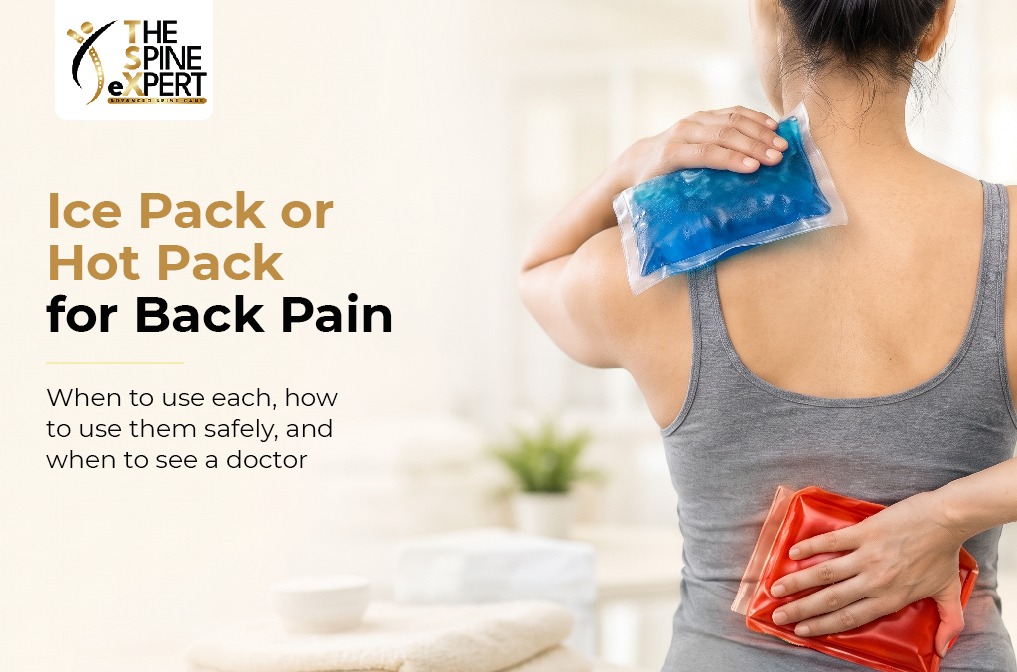
Ice pack or hot pack for back pain? Learn when each may help, how to use them safely, who should be careful and when to see a doctor.

Ice pack or hot pack for back pain? Learn when each may help, how to use them safely, who should be careful and when to see a doctor.
In case you experience an acute pain in your back, chances are high that the first thing you will grab is either ice from your freezer or a heat pack. They are inexpensive, easy to apply and readily available at home. However, using the wrong type of treatment can only worsen the situation. So which should you use, an ice pack for back pain or a hot pack for back pain?
In reality, it can depend on the situation as to which one of these will be helpful. Below is a list showing the instances when each is required, how to properly perform each exercise, and when you should be speaking to your doctor about back pain rather than self-treating.
The information contained in this guide is based on the expert opinions of Dr. Zahir Abbas Merchant, a spinal surgeon having over 15 years of experience in Orthopaedics at The Spine eXpert Clinic, Mumbai.
If you want the short version of ice or heat for back pain, here it is:
Many people ask what is better for lower back pain heat or cold. When it comes to routine lower back pain, it is believed that applying heat may provide slightly greater relief, especially when there is stiffness and spasms. The application of ice should be done immediately following any kind of injury. The bottom line is to choose the method that works for you.
Cold works mainly by calming things down. When you place a cold pack for back pain on the sore area:
This is why an ice pack for back pain should always be considered immediately following the injury, at the time that the tissues are inflamed. The use of ice will not resolve the reason for the pain, but it will help to dull it enough to be able to move.
Heat works in almost the opposite way. Heat therapy for back pain helps by:
That is why heat for back pain is often the better choice for stiffness, tension and pain that keeps coming back. Putting heat on sore back muscles before gentle stretching or a walk can make movement much easier.
All types of back pain are not the same. The following guidelines will help you know which one yours is.
If you have just lifted something heavy, twisted awkwardly or had a minor fall, start with an ice pack for back pain. Apply it during the first 24-72 hours since this is the time when the tissue is very inflamed, and cold helps alleviate the swelling and the pain. But after 72 hours, you can apply heat, particularly if the back muscles become stiff and tight.
If you experience stiffness and tightness in your back, particularly when getting out of bed or after prolonged periods of sitting, heat for back pain usually works best. Warmth helps the muscles relax and lets you move more freely. A heat pack for back pain for 15 to 20 minutes before gentle stretching can be very helpful.
Where there is pain for several weeks or more, it will most likely not be due to new inflammation. For this reason, heat therapy for back pain can be less painful and aid in keeping your muscles flexible. However, there are patients suffering from chronic back pain who experience relief when using ice in cases of a flare-up. In case you have chronic back pain, you need a diagnosis.
When one has exercised very intensively, after gardening or weightlifting, their muscles may get sore over a period of 1 or 2 days. If the muscle soreness occurs immediately and is hot or sharp, a cold pack for back pain may help on the first day. If it is a dull, achy, stiff kind of soreness that builds up the next day, a hot pack for back pain is usually more soothing.
When you suffer from back pain that extends from your lower back to the buttocks, and further down to your legs, it means that one of your nerves is irritated, such as sciatica. Initially, when it comes to treating lower back pain, cold therapy can be applied to the lower back to help eliminate the irritation. However, using hot therapy will help in relaxing the muscles in the particular area. Yet, hot and cold therapies cover up the problem, therefore, in case of severe leg pains, consult an expert.
Ice and heat therapy may offer temporary relief from pain associated with several back disorders, such as:
All of them, however, involve the use of ice and heat as complementary means. They make you feel more comfortable during the process of healing or during treatment.
Follow these simple steps to use an ice pack for back pain safely:
Here is how to use a hot pack for back pain the right way:
Yes, it is true that using both methods alternately does wonders, especially if the first 48 to 72 hours post injury are over. The method is known as contrast therapy. One easy way to do it is:
Some may favor ice application post physical exertion to cool things down, while using heat pre physical exertion to relax the muscles. Remember that it is never wise to apply ice and heat at the same time and in the same place. Make sure that your skin temperature goes back to normal in between applications. In the end, follow what your body tells you.
Ice and heat treatments are generally safe when applied properly. Here are some guidelines to follow:
Some people need to be extra careful or consult a physician before applying ice packs or heating pads:
Most cases of back pain can be relieved in a few weeks with simple treatment measures. However, there are several warning signs which require immediate medical attention and should never be self-treated using cold pack or hot pack therapy, which include the following:
You should also book an appointment with a spine specialist if your back pain lasts longer than four to six weeks or keeps coming back, as conditions like a slipped disc or lumbar canal stenosis may need proper diagnosis and treatment.
Both ice and heat are useful when combined with other methods. There are many things which can be done to heal back pain, including:
This depends on what kind of pain you have. Ice is generally preferred in the first 24-72 hours after an acute injury or strain. Heat is generally preferred for stiffness and spasms in muscles. In general, when you have lower back pain, heat feels better. Choose the one that helps relieve your symptoms more.
Keep an ice pack for back pain for about 15 to 20 minutes each time, always with something between the pack and your skin. Make sure that you have waited at least an hour, or until your skin has returned to normal temperature, before reusing it.
It is generally better to avoid a hot pack for back pain within the first 24 to 72 hours following an injury, particularly where there is any inflammation, because heat may worsen the situation. Begin by using ice, and then move to heat after the initial pain and inflammation subsides.
It is not done simultaneously on the same part. One can use the two alternately, for example, 15 to 20 minutes of ice followed by a pause and then another 15 to 20 minutes of heat. This method is normally recommended after two to three days from an injury.
Definitely not. Using the heating pad or pack for sleep purposes will increase chances of getting burned despite setting it to a low temperature. Use heat during daytime and remove it before you go to bed. In case you use electric heating pad, ensure that it has automatic shut-off feature.
Visit a doctor immediately if you experience back pain along with lack of control over your bowel movements and bladder function, numbness of the groin area, weakness in the legs, fever, or if the pain is caused by an accident. You should also visit a doctor if your pain persists for four to six weeks.
So, ice pack or hot pack for back pain? Use an ice pack for back pain for a fresh strain or injury in the first few days, and switch to a hot pack for back pain for stiffness, spasm and long lasting aches. Many people benefit from both, used one after the other. Whatever you choose, keep sessions to around 15 to 20 minutes, protect your skin and never sleep with a pack on.
Remember that ice and heat ease the symptoms but do not treat the underlying cause. If your back pain is severe, does not improve, spreads down your leg like sciatica, or comes with any warning signs, it is time to see a spine specialist. The right diagnosis, along with treatments such as physiotherapy, can help you get back to moving comfortably and confidently.
In case your back pain requires professional advice, you can schedule an appointment with Dr. Zahir Abbas Merchant who will diagnose your problem and give you an appropriate treatment plan.
Discover home remedies for back pain, including gentle stretching, heat and ice, better posture and sleep tips. Learn what to …
Follow for more updates
Copyright © 2026 The Spine Expert – Advanced Spine Care
Design and Managed by DigiScrub

TOO FAR FROM OUR MUMBAI CLINICS?
“Get expert guidance for your spine problems without travelling to Mumbai.”
NOW AVAILABLE FOR PRIVATE ONLINE CONSULTATIONS
Book Appointment