
Spinal Tumor Treatment in Mumbai
What Is a Spinal Tumor?
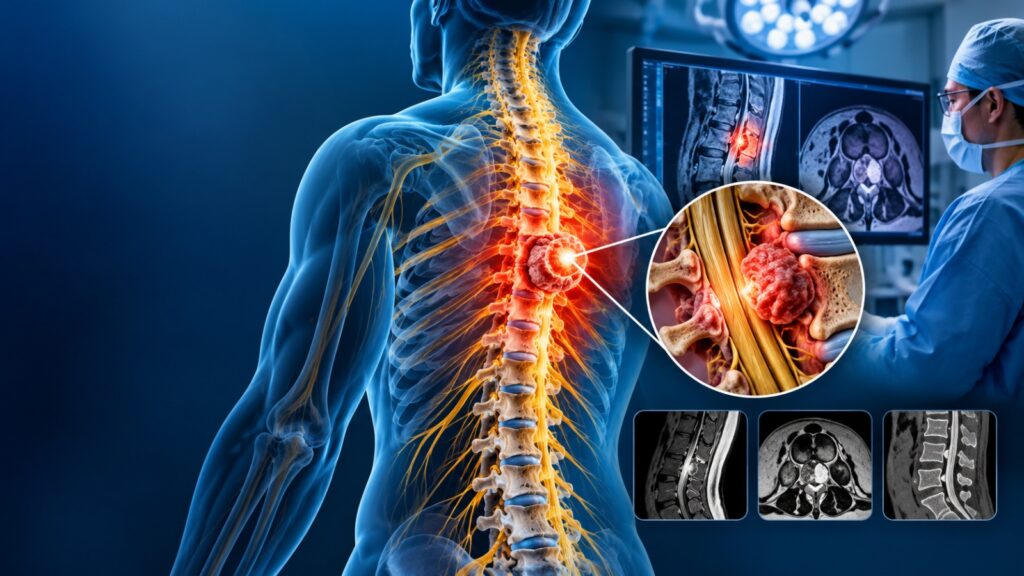
Spinal Tumor is a growth that occurs within the spinal cord or around the spinal area. The disease may start from the vertebrae, the membranes that surround the spinal cord, or even from within the spinal cord itself, hence the reason why spinal cord tumor is often associated with it. When people hear the word “tumor,” the first thing that comes to their mind is spinal cancer; however, there are also benign tumors which are not cancerous and usually grow slowly without metastasizing. However, they may put pressure on the spinal cord and the nerves. When compared to benign, malignant tumors are more likely to be cancers. Tumors have a certain effect depending on their location and size; that is why the precise diagnosis influences the method of spinal tumor treatment.
Spinal Tumor Symptoms
Spinal tumor symptoms vary depending on where the tumor is located, its size and rate of growth. The most common first symptom is back pain that is constant, progressively worsening, and typically worse during the night and while lying down, as opposed to mechanical back pain that gets better with rest. Back pain may radiate to the arms, legs and around the chest and abdomen as a belt-like sensation. As the tumor compresses on the nerves or spinal cord, there will be tingling, numbness, muscle weakness, difficulty walking and controlling the bowel movements. These spinal cord tumor symptoms can develop over weeks or months. Those who are looking for spinal cancer symptoms or spinal cord cancer symptoms should be aware that unexplained weight loss, fatigue and history of cancer increase their worries. Weakness in legs or problems controlling bladder and bowel become emergencies.
Types of Spinal Tumor
Spinal cord tumor types are classified depending on the location relative to the cord and the layer surrounding it.
Extradural
Extradural tumors are located outside the protective layer of the cord and mostly occur in the vertebrae. Extradural tumors account for the majority of spinal tumors, and they are mostly metastases of cancer occurring elsewhere in the body.
Intradural Extramedullary
These develop within the protective membrane but outside the spinal cord. The growths are typically non-cancerous tumors such as meningiomas and neurinomas, and they exert pressure on the spinal cord or the nerve roots.
Intramedullary
Intramedullary spinal tumors are those which develop within the cord. They are quite rare and include ependymomas and astrocytomas. Being within the cord, the surgery requires high accuracy.
When Cancer Spreads to the Spine
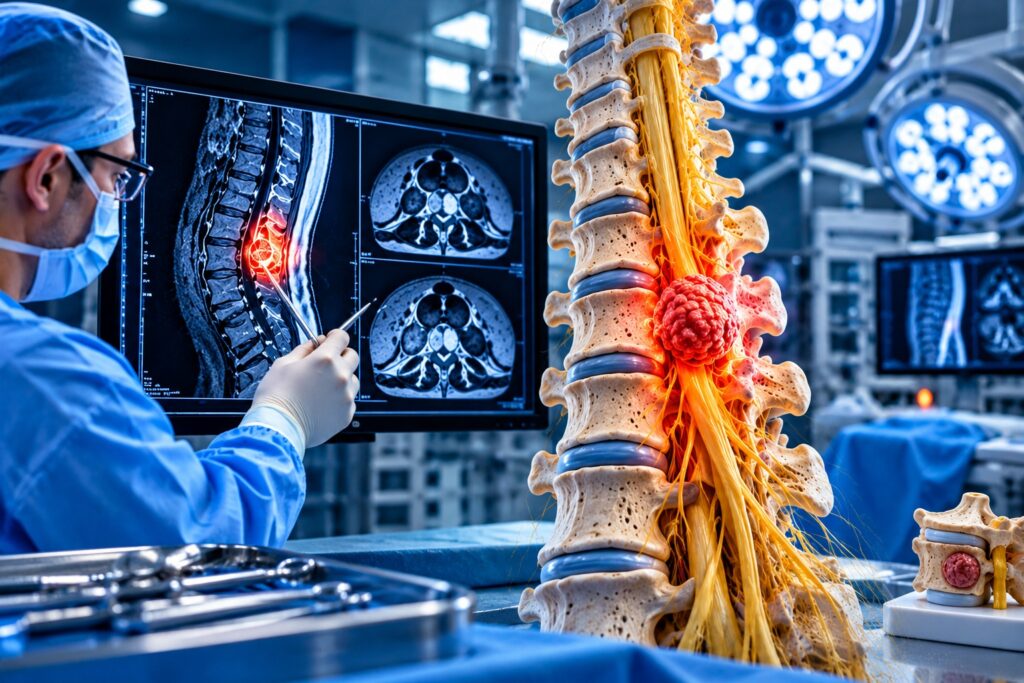
The majority of cancers in the spine originated elsewhere. The cancers that commonly originate in the breast, lungs, prostate, kidney and thyroid, as well as blood cancers like myeloma, may spread to the spine via the blood system. This is known as spinal metastases, while in colloquial terms it is referred to as spinal cord cancer. The tumor may debilitate the bone structure causing spinal fracture or it may grow towards the canal resulting in spinal cord compression. Back pain that occurs in patients who have been diagnosed with cancer in the past should not be dismissed as muscle strain.
What Causes Spinal Tumors?
Spinal tumor causes are unknown in most cases. Metastatic spinal tumors start with cancer from somewhere else in the body. Primary tumors are caused by abnormal growth of cells from bones, the membranes covering the nerves or the spinal cord; some types of primary spinal tumors are associated with hereditary conditions like neurofibromatosis and von Hippel-Lindau disease. Radiation history and a weak immune system can increase the risk of developing a spinal tumor. Injury, lifting, and bad posture do not cause spinal tumors, but can help detect them.
How Spinal Tumors Are Diagnosed
An MRI with contrast is the primary investigation since it will provide information about the tumor as well as the cord and nerves in great detail. The CT scan will demonstrate bone involvement, while an X-ray will reveal compression or destruction of the vertebrae. A PET-CT scan or whole body scan can be useful in investigating metastasis. A spinal infection or spinal tuberculosis may appear almost identical, and therefore a biopsy may be necessary for a diagnosis.
Spinal Tumor Treatment
Spinal cancer treatment and care for noncancerous tumors depend on the type, location of the tumor, metastasis, and the patient’s neurological and general state of health. The objectives are to preserve the nerves, treat and control the tumor, and manage the pain.
Surgery
Spinal tumor surgery is recommended if the tumor is pressing on the spinal cord or nerves, if there is a threat to the stability of the spine or the need for a diagnosis of the tissue. Dr. Zahir Abbas Merchant, who has more than 15 years of experience in orthopedics, safely excises the tumor, reduces the pressure on the spinal cord and reconstructs the spine through spinal fusion or spinal reconstruction surgery.
Radiation and Radiosurgery
Radiation either decreases or stops tumor growth when they cannot be completely removed and is done after surgery. Stereotactic radio surgery is an extremely accurate radiation treatment method and takes a few sessions.
Working with the Oncology Team
Most spinal tumors require the intervention of medical oncology, consisting of chemotherapy or hormones. Collaboration is required between the spine surgeon, oncologist, and radiation physicians so that the treatments for both spine conditions and tumors complement each other.
When to See a Spine Doctor
One must see a specialist regarding their back pain when it gets worse, and/or when back pain is associated with other symptoms such as numbness, weakness, weight loss, or if one has suffered from cancer previously. In situations where one experiences leg weakness, trouble urinating or defecating, urgent treatment is necessary. At The Spine eXpert in Mumbai, Dr. Zahir Abbas Merchant will help with this.