
Lumbar Spondylosis Treatment in Mumbai
What Is Lumbar Spondylosis?
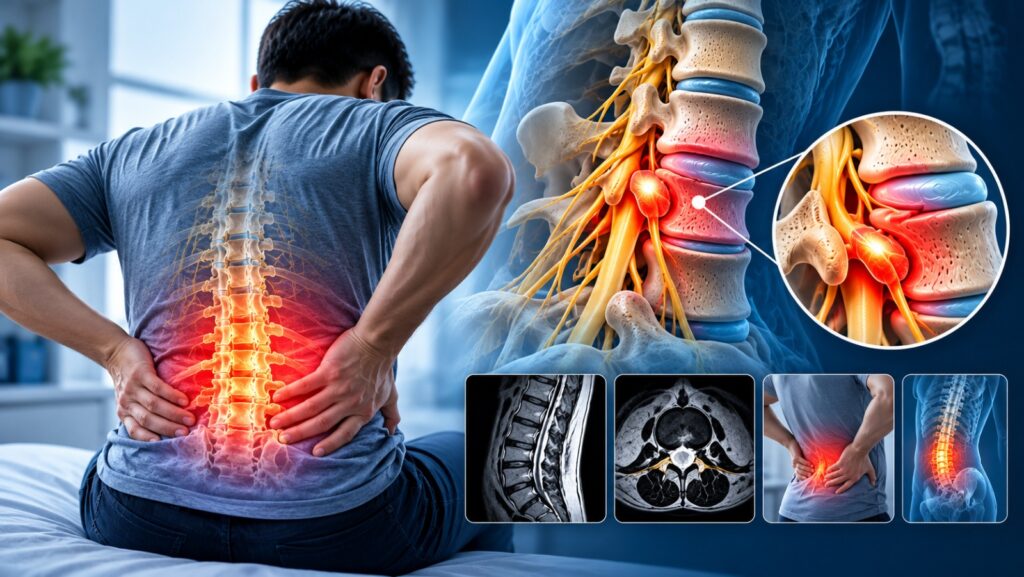
Lumbar spondylosis involves age-related degeneration of the intervertebral discs and facet joints of the lower back. The lumbar spondylosis meaning is very clear: “spondylosis” means degenerative spine condition, while “lumbar” means the lower back. What is lumbar spondylosis, then, in layman’s terms? It can be described as arthritis of the spine. As time goes by, the discs dry up and flatten, and the little joints at the back deteriorate, resulting in the formation of more bone at that site. Spondylosis is a general name for any wear and tear on the spine, and where this process occurs on the neck, it is termed cervical spondylosis. Lumbar spondylosis is common among people over forty years of age and usually does not have any symptoms. The treatment for effective lumbar spondylosis is the treatment of its symptoms and spinal movement.
Lumbar Spondylosis Symptoms
There are various lumbar spondylosis symptoms and sometimes early lumbar spondylosis may not have any symptoms. Symptoms will begin when there is lower back pain that is dull along with stiffness, usually in the morning or following sitting for an extended period of time. This is worsened with prolonged standing, walking or bending and relieved by rest and gentle movements. Other people may experience pain in their buttock and thighs. In the case that the nerves are being irritated, there could be sciatica pain in which there is a tingling and numbness in the foot. They tend to appear and disappear, becoming apparent after strenuous work or travelling.
What Causes Lumbar Spondylosis?
The main lumbar spondylosis causes are ageing and constant mechanical stresses. The discs lose their fluid content and flatten out while the tissues surrounding them get thickened due to the ageing process. Many other factors cause the process to accelerate – heavy labour or constant bending while working, a sedentary lifestyle accompanied by weak muscles of the spine, excess weight, smoking, prior damage to the spine and a history of early signs of disc degeneration in one’s family. Bad posture caused by prolonged sitting at one’s desk or riding a two-wheeler is another factor that causes stress to the spine. Everyone who has these risks does not develop symptoms, which is why two individuals having similar scans feel totally different.
Understanding Your X Ray or MRI Report
A lumbar spondylosis x ray shows the damage directly, while the MRI will reveal the discs and nerves. It will often be referred to as “spondylosis lumbar spine” in the reports, but it sounds much scarier than it actually is.
What Mild and Early Lumbar Spondylosis Mean
Mild lumbar spondylosis and early lumbar spondylosis mean that the wear is minor, with only minor loss of disc height or bony changes. They are very frequent after forty years of age and usually discovered incidentally; therefore, no treatment other than exercise and good posture is needed.
What Spondylotic Changes and Osteophytes Mean
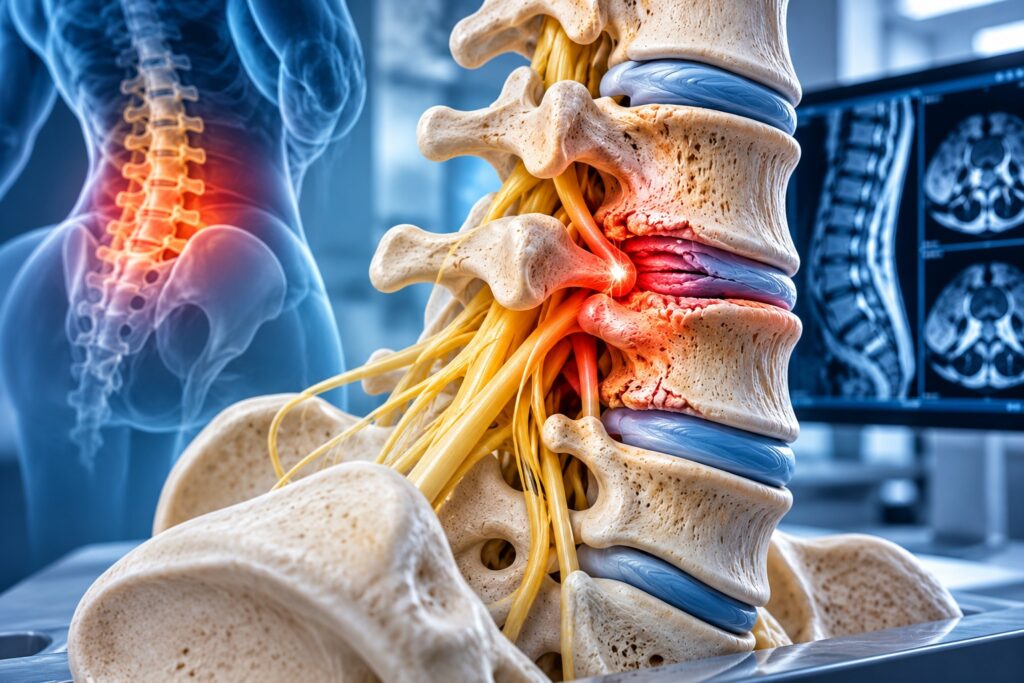
Spondylotic changes in lumbar spine this is what the report means by degenerative changes. It includes disc thinning and joint thickening and osteophytes, which are bone growths found at the ends of the vertebrae as the body’s response to stabilize a damaged vertebra. Osteophytes are normally not dangerous unless they squeeze a nerve.
Which Levels Are Usually Affected
The lowest two segments bear the most weight, hence the wear and tear occurs at L4-L5 and L5-S1, as well as L3-L4. The degenerative disk disease is mostly associated with disc bulge at L4 L5, and when both occur, they may affect the same nerve.
Is Lumbar Spondylosis Serious?
Therefore, is lumbar spondylosis serious disease? No, not really. It is just slow, normal wear, and your scan will show much more than you feel. What matters is when wear is pinching your nerves. This may be because bone spurs and ligaments have narrowed your spinal canal, which is called lumbar canal stenosis, or because a worn joint has allowed one of your vertebrae to slip out of place, a condition called spondylolisthesis. These are the scenarios where treatment is necessary, so symptoms will take precedence over the scan.
Lumbar Spondylosis Treatment
The goal of lumbar spondylosis treatment is to reduce pain, improve mobility and prevent recurrence, and almost everyone begins without surgery.
Physiotherapy and Exercises
The physiotherapy program forms the basis. Lumbar spondylosis exercises like pelvic tilts, knee to chest stretches, bridging, cat-camel and abdominal muscle strengthening provide good support for the spine and help increase flexibility. Walking, swimming and biking are usually tolerable, and a physiotherapist can design an exercise plan according to the pain.
Medication and Activity Change
Painkillers, anti-inflammatory medication, along with muscle relaxants for spasms, should be enough for the duration of the treatment of the attack. The use of a heat pack will ease stiffness. Heavy lifting should be avoided; no prolonged sitting or forward bending and weight loss is required.
Injections
In case pain in the legs caused by an inflamed nerve continues, an epidural or nerve root injection may help decrease inflammation and enable exercising.
Surgery
Surgery is required very rarely and is taken into consideration only in cases of nerve compression with weakness, severe stenosis, and an unstable joint where months of conservative treatment have failed. With Dr. Zahir Abbas Merchant, an experienced physician in the field of orthopedics for over 15 years, surgery would be recommended only if necessary.
Can Lumbar Spondylosis Be Cured Permanently?
It is not realistic to find a cure for lumbar spondylosis since there is nothing that could ever return a disc or joint back to its youth condition. There is only management for a certain period of time. Most patients feel alright and continue to function, with episodes that can easily be brought under control, provided they maintain their exercises, good posture, and a healthy body weight. Such management is the practical aim for lumbar spondylosis treatment, similar to the management of blood pressure.
Dorsal and Thoracolumbar Spondylosis
The type of spondylosis that occurs at the middle back is known as dorsal spondylosis while thoracolumbar is where the middle and lower back meet, at D12 to L1 vertebrae. Dorsal and thoracolumbar spondylosis are less common than lumbar and cervical spondylosis since the ribcage keeps the middle part stiff. The signs and symptoms are the same, with stiffness and soreness being the primary indicators.
When to See a Spine Doctor
In case you have prolonged back pain, recurring back pain, or problems sleeping or moving about, then you need to visit a specialist for the spine. Also, if you have chronic pain that extends to your foot below the knees, then it is something that requires attention. If you have problems with your bladder or bowels, then that is also an emergency situation.
At The Spine eXpert in Mumbai, Dr. Zahir Abbas Merchant, a qualified Orthopedic and Spine Surgeon having extensive experience in orthopedics for more than 15 years, provides treatment of lumbar spondylosis according to your examination results and your scans related to your symptoms. He treats the patient and not the reports and interprets your scans for you first.