
Cervical Spondylosis Treatment
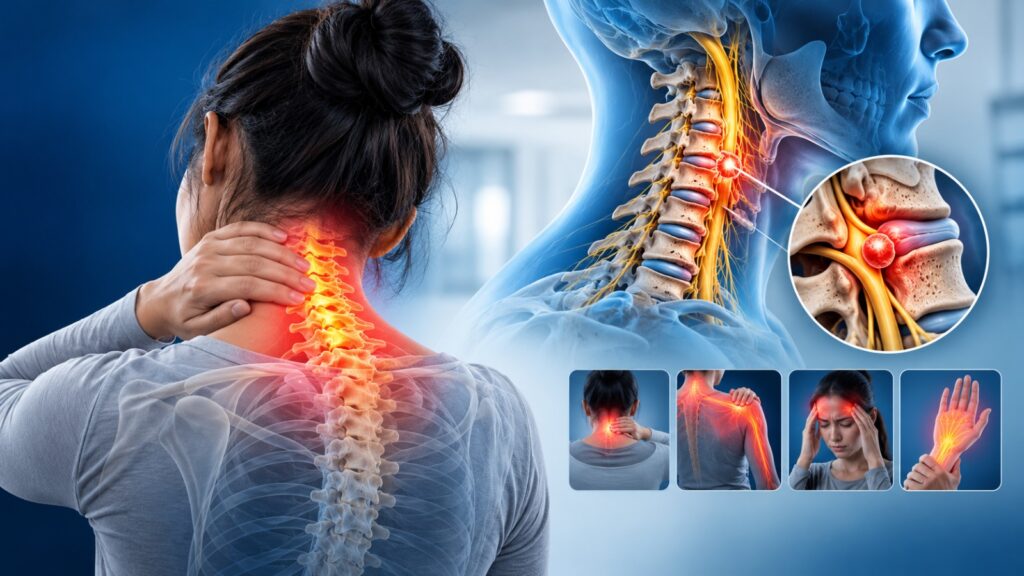
What Is Cervical Spondylosis?
Cervical Spondylosis is a type of disease caused by degeneration of bones and disks in the neck region due to the aging process. Cervical Spondylosis meaning is very clear; cervical means neck whereas spondylosis means degeneration of the spine. In course of time, the soft discs located between neck bones get dehydrated and their size gets reduced. As a result, the body begins producing small bone outgrowths. These degenerative changes in the cervical spine may result in stiffness, pain, and even irritation of adjacent nerves. This is one type of spondylosis, and when this occurs in the lower back, it is known as lumbar spondylosis. But what is surprising is that many people who are above the age of 50 show signs of spondylosis on their scans without any pain at all.
Cervical Spondylosis Symptoms
The cervical spondylosis symptoms tend to develop gradually and vary in nature. Neck pain and stiffness are common symptoms; patients usually complain of pain in the neck during the mornings and prolonged working periods. It is usually referred to as spondylitis neck when experiencing such stiffness, but the right name should be spondylosis.
Some of the symptoms experienced are:
- Pain and stiffness in the neck, which can radiate into the shoulder area
- Headache that originates from the back part of the head
- Weakness, numbness or tingling sensation in the arms, hands and fingers
- Grinding or clicking sensation while rotating the neck
- Loss of balance or coordination in severe cases
Cervical spondylitis symptoms that females have are almost similar to those of males. Female workers who have to sit for prolonged periods on their desks will likely experience shoulder pain, headache, and a tingling sensation in their hands first. Pressure on the spinal cord may cause cervical myelopathy that requires immediate treatment.
What Causes Cervical Spondylosis?
Age is the prime cause, although some lifestyle choices can contribute to the problem. The risk factors involved in cervical spondylosis causes are as follows:
- The cervical disc problems such as protrusion or herniation of cervical discs
- Poor posture, increased screen time or usage of mobile devices
- Inactive lifestyle owing to long hours of driving and travel
- Usage of an extremely high or extremely low pillow while sleeping
- Professions including heavy lifting and movements of the neck
- History of trauma to the neck, smoking, and family history
All these risk factors can result in the narrowing of the spinal canal called cervical stenosis.
Understanding Your X Ray and MRI Report
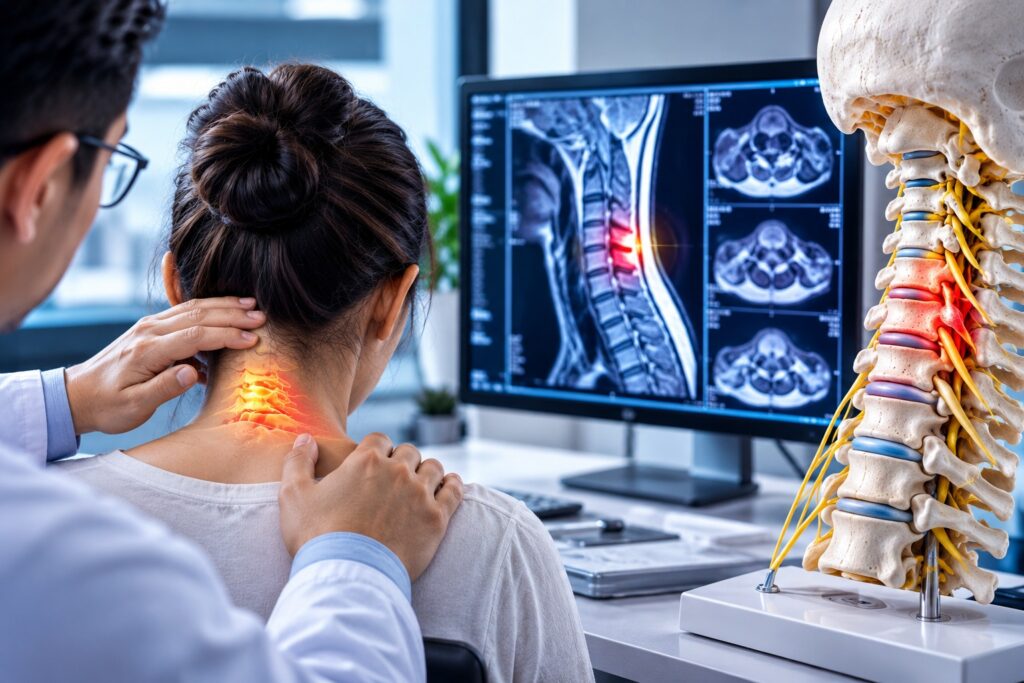
The cervical spondylosis x-ray will show you the bones, the disc spaces, and bony growths that you have in your neck. The MRI will give you a better view of the discs, nerves, and spinal cord. Here are the meanings behind some report words.
What mild and early cervical spondylosis mean
The condition of mild cervical spondylosis refers to early degeneration without much bone thickening. It is quite common and can be treated by correcting your posture.
What degenerative changes and osteophytes mean
Degeneration refers to the natural breakdown of the discs and joints. Osteophytes refer to the development of bone spurs. Their significance lies only in the event of their interaction with nerves or the spinal cord.
C5 C6 and other levels
The neck consists of seven vertebrae, which are designated as C1 through C7. The most commonly affected are C5-C6 and C6-C7 because of their mobility. The doctor will correlate the level mentioned in your reports to your symptoms.
Cervical Spondylosis Treatment Options
Surgery is not required for the majority of people. Proper cervical spondylosis treatment will depend on your symptoms, scans, and lifestyle. Cervical spondylitis treatment is the same, because the two names apply to the same condition.
Medication and rest
Medicines that are prescribed to you by the doctor will reduce your pain. Short breaks, hot pack therapy, and support pillows will also be beneficial for her. Soft collars will be recommended for only a few days.
Physiotherapy and exercises
Physiotherapy forms the foundation of long term care. Cervical spondylosis exercises like chin tuck exercise, neck rotation exercises, shoulder rotations, and neck exercises help to improve one’s posture and decrease stiffness. These should be learned from a physiotherapist in the beginning, and avoid any activity that aggravates arm pain or numbness.
Surgery
If the patient experiences persistent pain, weakness or compression of the spinal cord, surgery is recommended. Possible surgical procedures can be either ACDF surgery, which involves the removal of the affected disc and fusing the bones together, or laminectomy, which increases the space for the spinal cord. Cervical spondylosis C5 C6 treatment involves ACDF surgery if the disc pressing on the nerve is at this level.
When to See a Spine Doctor
Visit a spine specialist if you have recurring or persistent neck pain, or neck pain that is associated with weakness in your arms, numbness, weakness in your hands, difficulties walking, or urination problems. This is likely to prevent further complications down the road and even surgery.
Dr. Zahir Abbas Merchant is a skilled spine surgeon who has over 15+ years of experience in orthopedic treatment. Dr. Zahir at The Spine eXpert, listens to your complaints, conducts a thorough examination of your neck and analyzes your X-rays and MRI reports. He will tell you everything in simple words regarding your condition so that you know everything about it. His approach towards your health is to help you through non-surgical methods like medication and physiotherapy, and if needed, he would operate on you. Everyone is treated differently based on their age, job, and way of living.