

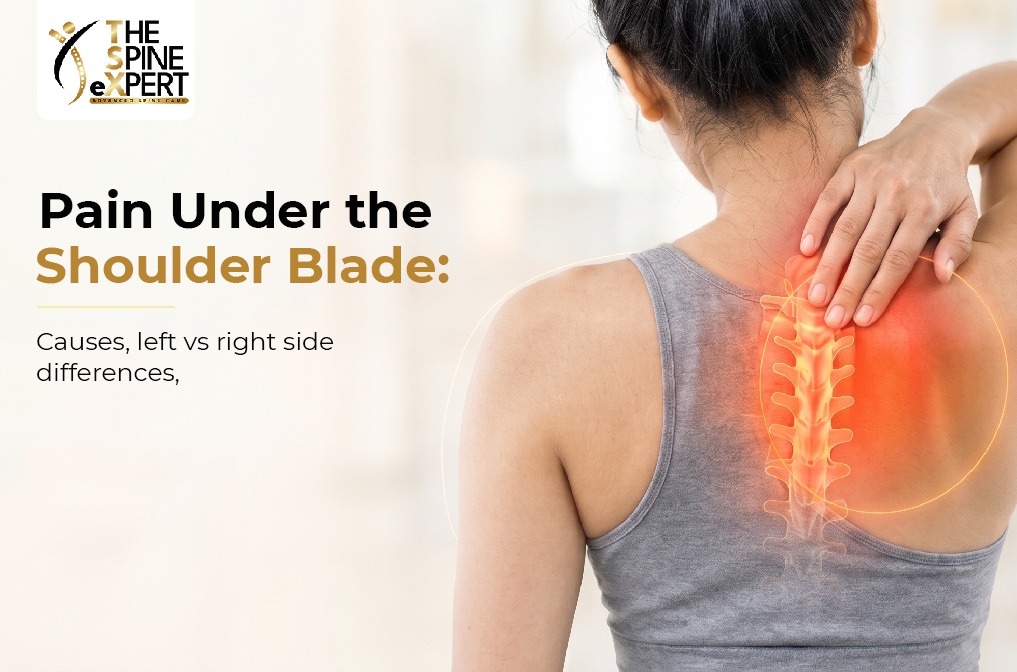
Pain under the shoulder blade can come from posture, muscle strain or the neck and spine. Know the causes, left vs right side pain and when to see a doctor.

Pain under the shoulder blade can come from posture, muscle strain or the neck and spine. Know the causes, left vs right side pain and when to see a doctor.
Pain under shoulder blade is one of the common upper back disorders. This is one of the most common conditions that affects the upper back region. This condition affects most individuals because of muscle strain, poor posture, or even something wrong with the neck region. In some rare instances, this can mean something serious with the heart, lungs, and the digestive organs. This guide outlines the most common causes of shoulder blade pain, the difference between left and right shoulder pain, when urgent medical care is needed, and when you should see a spine specialist.
Shoulder blade pain varies from one individual to another, and the sensation helps provide valuable information on the causes of pain. Individuals generally report:
Scapula pain (the scapula refers to the shoulder blade medically speaking) may not necessarily be felt within the bone. It is more commonly experienced in the surrounding muscles, joints or nerves. That’s why pain behind shoulder blade areas and pain below shoulder blade areas may have varied reasons.
Most cases of pain under shoulder blade are caused by the muscles of your shoulders and upper back. They are the muscles which keep your shoulder blades in position, and work very hard during the day.
Spending hours with your body bent over your laptop or staring at your phone places stress on the back. When you bend your head forward, and your shoulders get rounded, the muscles of the back have to work extra hard to keep your posture.
This causes:
Such kind of pain usually gets worse with movement and alleviated with relaxation, stretching, or changing posture.
A pulled muscle in shoulder blade commonly occur after:
The pain resulting from a muscle strain is typically localised and also increases upon movement of the affected limb. A muscle strain is normally resolved by rest and time.
When shoulder blade pain does not get any better, or is accompanied by arm problems, the problem might lie within the spine.
People are usually shocked to find out that pain under shoulder blade can originate from the neck area. The nerves coming out of the cervical spine serve the muscles surrounding the shoulder blades. When there is any irritation or impingement of such a nerve, the pain is experienced around the shoulder blade instead of the neck area.
Causes of neck pain can include:
Symptoms that indicate the problem in the neck region include neck pain and stiffness, as well as pain, numbness or tingling sensation extending from the neck down to the arms and hands.
Facet joints are joints found in the back part of the spinal column, allowing flexibility. Inflammation or degeneration of these facet joints in the cervical or thoracic region can lead to aches pain behind shoulder blade areas. The pain is usually increased when the patient looks upward, turns the head or twists the upper torso.
The spine of the thorax region lies straight between the shoulder blades. Problems here can cause back pain under shoulder blade areas, including:
In case of persistent back pain that radiates toward the shoulder blades, a spinal examination is highly recommended.
With osteoporosis patients, the spine bones tend to be weak and thin. There may be cases when a vertebra gets compressed during a mild fall, coughing, or even when bending. This condition is known as a compression fracture.
It often causes sudden sharp pain in shoulder blade or mid-back regions and is more prevalent among older patients, particularly postmenopausal women. Anyone who develops sudden onset of back pain and has fragile bones needs to see their physician.
Pain in between the shoulder blades (interscapular pain) is very typical. The most common causes include:
Since several vital organs are located in this region, sometimes interscapular pain may be related to the heart, the aorta (main artery in the body), the esophagus, or the lungs. In case of sudden severe pain between the shoulder blades, especially with chest pain or difficulty breathing, an emergency visit is required.
In most cases, the pain that comes from muscle and spinal issues affects both sides. However, there are times when the affected side may indicate something else.
Left shoulder blade pain may be linked to:
Right shoulder blade pain may be linked to:
This alone doesn’t determine the cause. It’s more important to focus on the symptom pattern and any warning signs.
Not all shoulder blade pain causes come from the muscles or the spine. Sometimes, there are other organs that are capable of referring pain to the shoulder blade area.
The pain that stays the same regardless of movement and is associated with problems with digestion or breathing, and which has an unknown cause should be discussed with your physician.
Contact the emergency services or visit the nearest emergency room if pain under shoulder blade comes with any of these:
Consult a doctor immediately if you experience:
Finding the cause of shoulder blade pain begins with an assessment process. The physician will normally:
The treatment will depend on the cause. In most instances where muscles and posture is involved, treatment is not complicated; nevertheless, when there is nerve or spinal involvement, specific treatment may be necessary.
For mild pain under shoulder blade from muscles or posture:
Physiotherapy is one of the most effective treatments. A physiotherapist can:
If pain doesn’t improve, a doctor may recommend:
A spine specialist can explain which options suit your condition.
Usually not. Most pain under shoulder blade is caused by muscle strain or poor posture and improves with simple care. However, it can occasionally signal a heart, lung or other serious problem. Get urgent help if it comes with chest pain, breathlessness, sweating or sudden severe pain.
Yes, it can happen because poor posture is among the most frequent reasons. Slouching and prolonged screen time affect the muscles surrounding the shoulder blades, resulting in pain, stiffness and neck and shoulder blade pain.
Left shoulder blade pain is primarily due to muscle strain or a neck issue. In certain instances, it could be connected to the heart; therefore, you should see a doctor immediately if it is accompanied by chest pain, shortness of breath, sweating or nausea.
Yes. A pinched nerve from a slipped disc or cervical spondylosis can send pain to the shoulder blade, often with neck pain and tingling or numbness down the arm.
Pain from a pulled muscle in shoulder blade the recovery for such problems is often within a few days to a few weeks with rest and mild exercise. Problems with nerves or the back may take a longer period. In case you experience pain beyond a few weeks or recurrently, seek professional help.
In case the pain is not that severe, see your general practitioner first. However, in case of persistent pain that continues to recur over several weeks together with tingling or numbness, and arm weakness, you have to see a spine specialist.
Pain under shoulder blade is common, and most cases come from muscle strain, poor posture or problems in the neck and upper spine. Knowing the difference between left shoulder blade pain and right shoulder blade pain, and recognising the warning signs, helps you decide when simple care is enough and when you need medical attention.
If your shoulder blade pain isn’t improving, keeps coming back, or comes with neck pain, arm symptoms or ongoing back pain, a spine specialist can find the cause and recommend the right treatment, from physiotherapy to advanced care for conditions like cervical spondylosis, a slipped disc or osteoporosis.
Discover home remedies for back pain, including gentle stretching, heat and ice, better posture and sleep tips. Learn what to …
Follow for more updates
Copyright © 2026 The Spine Expert – Advanced Spine Care
Design and Managed by DigiScrub

TOO FAR FROM OUR MUMBAI CLINICS?
“Get expert guidance for your spine problems without travelling to Mumbai.”
NOW AVAILABLE FOR PRIVATE ONLINE CONSULTATIONS
Book Appointment