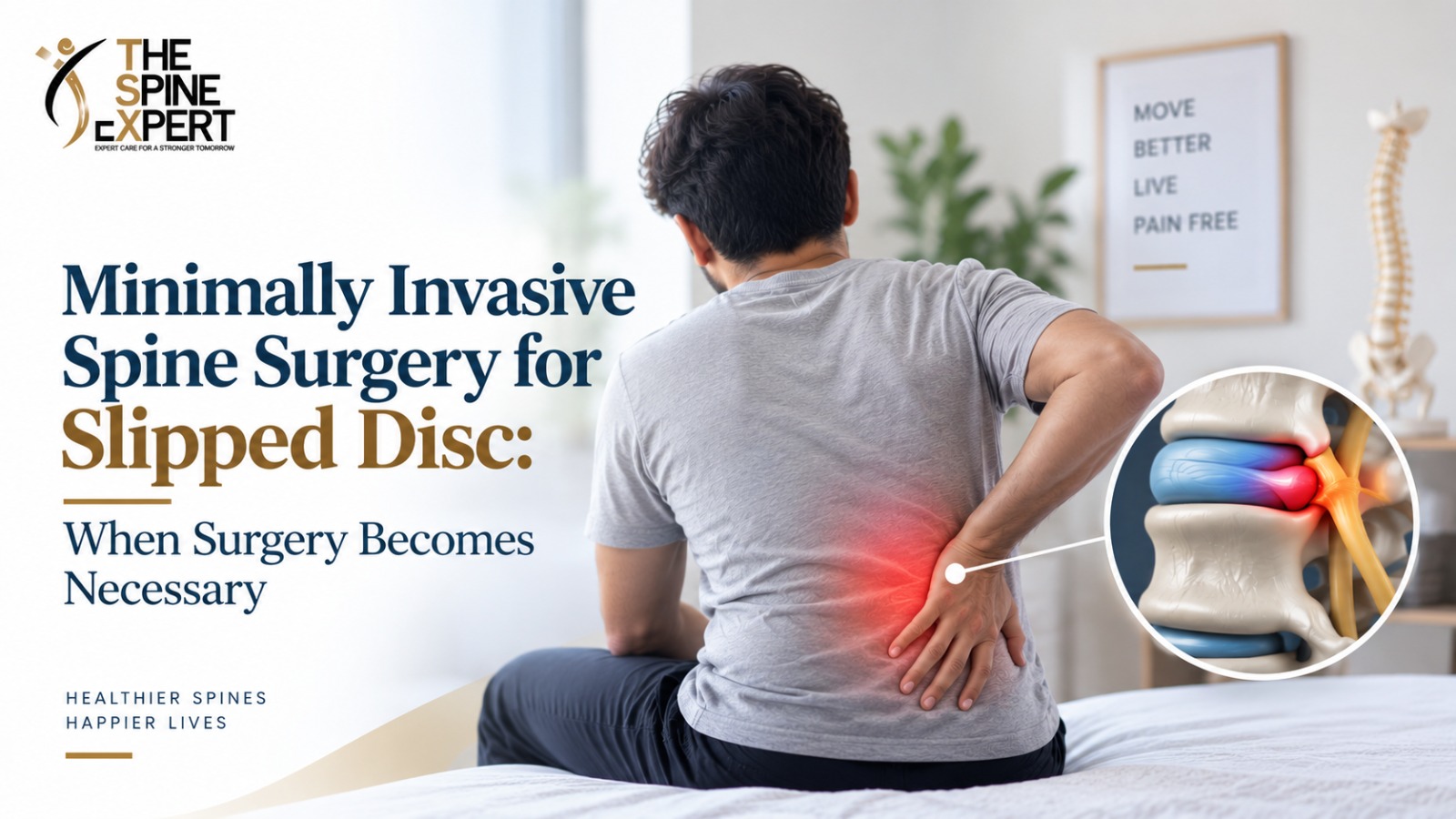
Is your back pain a slipped disc? Learn 7 symptoms that may point to a spine problem, red flags that need urgent care, and when to see a spine specialist.


Back pain is very common. Most of the time it comes from a strained muscle or a stiff joint, and it gets better on its own within a few weeks. But sometimes back or neck pain comes with other symptoms, such as pain shooting down the leg, tingling, or weakness. These can be signs that a nerve is being irritated, often by a slipped disc or another spine problem.
This guide explains what a slipped disc is, seven symptoms that may point to a spine problem, how these differ from ordinary muscle pain, and when you should see a doctor. It is meant for general information only. A proper examination by a doctor is the only way to know what is really causing your pain.
What Is a Slipped Disc?
Between the bones of your spine (vertebrae) are soft, round cushions called discs. Each disc has a tough outer layer and a softer, jelly-like centre. Discs act as shock absorbers and allow your spine to bend and move.
A slipped disc, also called a prolapsed or herniated disc, happens when part of the soft centre pushes out through a weak spot or tear in the outer layer. The name is a little misleading, because the disc does not actually slip out of place. It bulges or leaks outwards.
If this bulge presses on or irritates a nearby nerve, it can cause pain, numbness, or weakness along the path of that nerve. Slipped discs are most common in the lower back, but they can also happen in the neck.
Not every slipped disc causes symptoms. According to the NHS, many people have a slipped disc and never know it.
What Causes a Slipped Disc?
Discs naturally lose water and become less flexible with age, which makes them more likely to tear. The NHS lists ageing, exercising too hard, lifting heavy objects the wrong way, sitting or driving for long periods, and being inactive or overweight as possible causes. Smoking can also weaken disc tissue. Sometimes a slipped disc happens after a sudden twist or lift, and sometimes there is no clear reason at all.
7 Slipped Disc Symptoms That May Indicate a Spine Problem
Having one of these symptoms does not mean you definitely have a slipped disc. Many of them can also be caused by other conditions. But if you notice them, especially more than one together, it is worth getting your back or neck checked.
Pain That Travels Down Your Leg or Arm
This is one of the most typical signs of a slipped disc. When a disc in the lower back presses on a nerve root, pain can spread from the lower back or buttock down the back or side of the thigh, into the calf, and sometimes into the foot. This pattern is called sciatica. It usually affects one leg, and some people find the leg pain bothers them more than the back pain.
If the slipped disc is in the neck, the pain often travels from the neck into the shoulder, arm, and hand. So if your neck pain comes with pain running down one arm, a nerve in the neck may be involved.
Numbness, Tingling, or "Pins and Needles"
An irritated nerve can send unusual signals. You may feel numbness, tingling, or a pins-and-needles sensation in part of your leg, foot, arm, hand, or fingers.
These feelings often follow a particular strip of skin that is supplied by the affected nerve. This pattern helps doctors work out which level of the spine may be causing the problem.
Weakness in Your Leg, Foot, Arm, or Hand
When pressure on a nerve is significant, the muscles that nerve controls can become weak. Signs of this include:
- Your foot slapping on the ground or your toes catching while walking (sometimes called foot drop)
- Difficulty standing on your heels or toes
- A leg that feels like it may give way
- A weaker grip, or dropping things more often
- Difficulty lifting your arm
Weakness should always be checked by a doctor, and promptly if it is getting worse. The NHS notes that worsening muscle weakness or numbness is one of the reasons a specialist may discuss surgery.
Pain That Gets Worse When You Cough, Sneeze, Sit, or Bend
Coughing, sneezing, and straining briefly increase pressure inside the spine. Mayo Clinic notes that pain from a herniated disc can worsen with coughing or sneezing, and some people feel a sudden jolt of pain down the leg when they do.
Sitting for long periods or bending forward can also make lower back disc pain worse. Many people find that lying down eases it. With a disc problem in the neck, certain movements, such as turning the head or tilting it back, may increase the arm pain.
Sharp, Burning, or Electric-Shock-Like Pain
Nerve pain often feels different from a muscle ache. People with a herniated disc may describe burning pain or a sensation like an electric shock that shoots along the leg or arm.
In contrast, pain from a pulled muscle is usually a dull ache, tightness, or spasm that stays in one area of the back.
Leg Pain or Heaviness When Walking That Eases When You Sit
This symptom is less typical of a slipped disc and more typical of lumbar canal stenosis, a narrowing of the spinal canal in the lower back that usually develops slowly with age.
People with lumbar stenosis often notice aching, heaviness, cramping, or tingling in the buttocks and legs that comes on while walking or standing. According to NHS inform, these symptoms are usually relieved by sitting down or leaning forward. Some people find they can walk further when leaning on a shopping trolley.
Similar leg pain while walking can also be caused by poor blood flow to the legs, so a doctor may check the circulation as well.
Back or Neck Pain That Is Not Improving or Keeps Coming Back
Most everyday back pain settles within a few weeks. The NHS advises seeing a doctor if your back pain is not getting better after a few weeks or if painkillers are not helping. For herniated disc symptoms, the American Association of Neurological Surgeons recommends seeing a spine specialist if symptoms last longer than four weeks.
Pain that keeps returning, or that limits your work, sleep, or daily activities, also deserves a proper assessment.
Red Flags: When to Seek Emergency Care
Rarely, a slipped disc or other spine problem can press on the bundle of nerves at the base of the spine. This is called cauda equina syndrome, and it is a medical emergency.
Go to an emergency department straight away if you have back pain along with:
- Numbness around your bottom, genitals, or inner thighs
- Difficulty passing urine, or being unable to control when you pass urine or stool
- Loss of feeling or severe weakness in one or both legs, or symptoms that are quickly getting worse
- Sciatica in both legs
You should also seek emergency care if your back pain started after a serious accident or fall.
Symptoms That Need a Prompt Doctor's Visit
Some symptoms do not always mean something serious, but they should be checked soon. See a doctor without delay if your back pain comes with a fever or chills, unexplained weight loss, a swelling in your back, or pain that is worse at night. The same applies if you have a history of cancer or a weakened immune system.
Slipped Disc, Muscle Strain, or Spinal Stenosis? How the Symptoms Differ
The table below shows common patterns. Symptoms often overlap, so use this as a guide rather than a way to diagnose yourself.
Feature | Muscle Strain | Slipped Disc | Lumbar Spinal Stenosis |
Where you feel it | Mostly in the back | Back or neck, often spreading down one leg or arm | Buttocks and legs, sometimes both legs |
Type of pain | Dull ache, tightness, or spasm | Sharp, shooting, or burning | Aching, heaviness, or cramping |
Numbness or tingling | Not usually | Common | Common |
What makes it worse | Moving or using the strained muscle | Sitting, bending, coughing, or sneezing | Walking or standing for a while |
What often eases it | Rest and gentle movement | Lying down or changing position | Sitting or leaning forward |
How it usually starts | Often after lifting, a sudden movement, or overuse | Suddenly or gradually | Slowly over months or years, more often in older adults |
Other Conditions That Can Cause Similar Symptoms
A slipped disc is not the only cause of back pain with nerve symptoms. Your doctor will also think about other possibilities.
Spondylosis is age-related wear and tear of the discs and joints of the spine. It can cause stiffness and pain in the neck or lower back, and bone spurs can narrow the space around nerves. The American Academy of Orthopaedic Surgeons notes that a pinched nerve in the neck is often caused by these wear-and-tear changes in older people, while in younger people it is more often caused by a herniated disc.
Spondylolisthesis is a different condition, although its name is often confused with a slipped disc. In spondylolisthesis, one vertebra slips forward over the bone below it. It can cause back pain and, if nerves are pinched, pain or numbness in the legs.
Non-spine causes can also produce back or leg pain. These include hip joint problems, kidney problems, poor circulation in the legs, and nerve problems linked to conditions such as diabetes. This is why a careful examination matters.
How Is a Slipped Disc Diagnosed?
In many cases, a doctor can diagnose a slipped disc from your symptoms and a physical examination.
Your doctor will ask where the pain is, how it started, and what makes it better or worse. They will then check how your back moves, test the strength of your muscles, check your reflexes, and look for changes in sensation. A common test is the straight leg raise, where you lie on your back and the doctor slowly lifts your straightened leg. If this brings on your leg pain, it can suggest an irritated nerve root.
Do You Need an MRI?
Not always. The NHS explains that an MRI scan may be advised if your symptoms do not get better. Doctors may also request one sooner if you have weakness, red flag symptoms, or if surgery is being considered.
It is also important to know that scans often show changes that are not causing any pain. A large review published in the American Journal of Neuroradiology found that disc bulges were seen in about 30% of pain-free people aged 20, rising to about 84% of pain-free people aged 80. This is why a good spine specialist always matches what the scan shows with your actual symptoms and examination.
In some cases, nerve tests such as nerve conduction studies may be used to check how well a nerve is working.
Treatment Options for a Slipped Disc
The good news is that most slipped discs improve without surgery. InformedHealth.org, run by Germany’s Institute for Quality and Efficiency in Health Care, notes that in most people symptoms go away within six weeks.
Stay Gently Active
Long periods of bed rest are no longer recommended. If the pain is very bad, you may need to rest for a short time, but the NHS advises starting gentle activity such as walking as soon as you can. Gradually returning to your normal activities, within comfortable limits, usually helps recovery.
Medicines
A doctor may suggest pain-relief or anti-inflammatory medicines. For severe pain, stronger painkillers or muscle relaxants may be prescribed for a short time. Medicines for nerve pain are sometimes used if symptoms last longer. Anti-inflammatory medicines are not suitable for everyone, so always check with your doctor or pharmacist before taking them.
Physiotherapy
Physiotherapy focuses on exercises that improve movement, strengthen the muscles that support your spine, and teach safer ways to sit, bend, and lift. A physiotherapist can also guide you on how to stay active without making your symptoms worse.
Spinal Injections
If pain is severe or is not settling, a doctor may recommend spinal injections. A steroid injection placed near the irritated nerve can reduce inflammation and ease pain, which may make it easier to move and do physiotherapy. Pain relief from injections varies from person to person and may be temporary.
Surgery
Surgery is not usually needed. According to the NHS, it may be discussed if symptoms have not improved with other treatments, or if muscle weakness or numbness is getting worse. Emergency surgery may be needed for cauda equina syndrome.
When surgery is advised for a slipped disc in the lower back, a common option is a microdiscectomy, which removes the part of the disc pressing on the nerve through a small incision using a microscope. In selected cases, endoscopic spine surgery may be used, where the surgeon works through a very small incision with a thin camera. Like all surgery, these procedures carry risks, and your surgeon should explain whether they are right for you.
Simple Ways to Look After Your Spine
There is no guaranteed way to prevent a slipped disc, but some everyday habits may lower your risk and help your back stay strong.
Stay physically active and include exercises that strengthen your core and back muscles. When lifting, bend your knees, keep the object close to your body, and avoid twisting at the same time. If you sit for long hours at work or while driving, take regular breaks to stand and move. Keeping a healthy weight reduces the load on your spine. And if you smoke, stopping is good for your discs as well as your overall health.
Frequently Asked Questions
Can a slipped disc heal on its own?
Yes, in many cases. Symptoms often improve over a few weeks to a few months with activity, pain relief, and physiotherapy. Some people need further treatment if their pain does not settle or if they develop weakness.
Is walking good for a slipped disc?
For most people, gentle walking is helpful. The NHS recommends gentle exercise such as walking, as long as it does not make your pain worse. Start with short walks and increase slowly. If walking clearly worsens your leg symptoms, speak to your doctor or physiotherapist.
Can a slipped disc in the neck cause hand numbness?
Yes. A slipped disc in the neck can press on a nerve that travels to the arm and hand. This can cause pain in the shoulder or arm, along with tingling, numbness, or weakness in the hand or fingers.
Can a slipped disc cause pain in both legs?
It can, but most slipped discs affect one side. Pain, numbness, or weakness in both legs needs prompt medical attention. If it comes with numbness around the genitals or problems with bladder or bowel control, go to an emergency department immediately.
Is a slipped disc the same as spondylolisthesis?
No. A slipped disc is a problem with the cushion between two vertebrae. Spondylolisthesis is when one vertebra slips forward over the one below it. Both can cause back and leg pain, but they are different conditions and may need different treatment.
When should I see a spine specialist?
See a spine specialist if your back or neck pain is not improving after a few weeks, if pain is spreading into your leg or arm, or if you notice numbness or weakness. Seek emergency care straight away for any of the red flag symptoms listed above.
Book a Consultation